
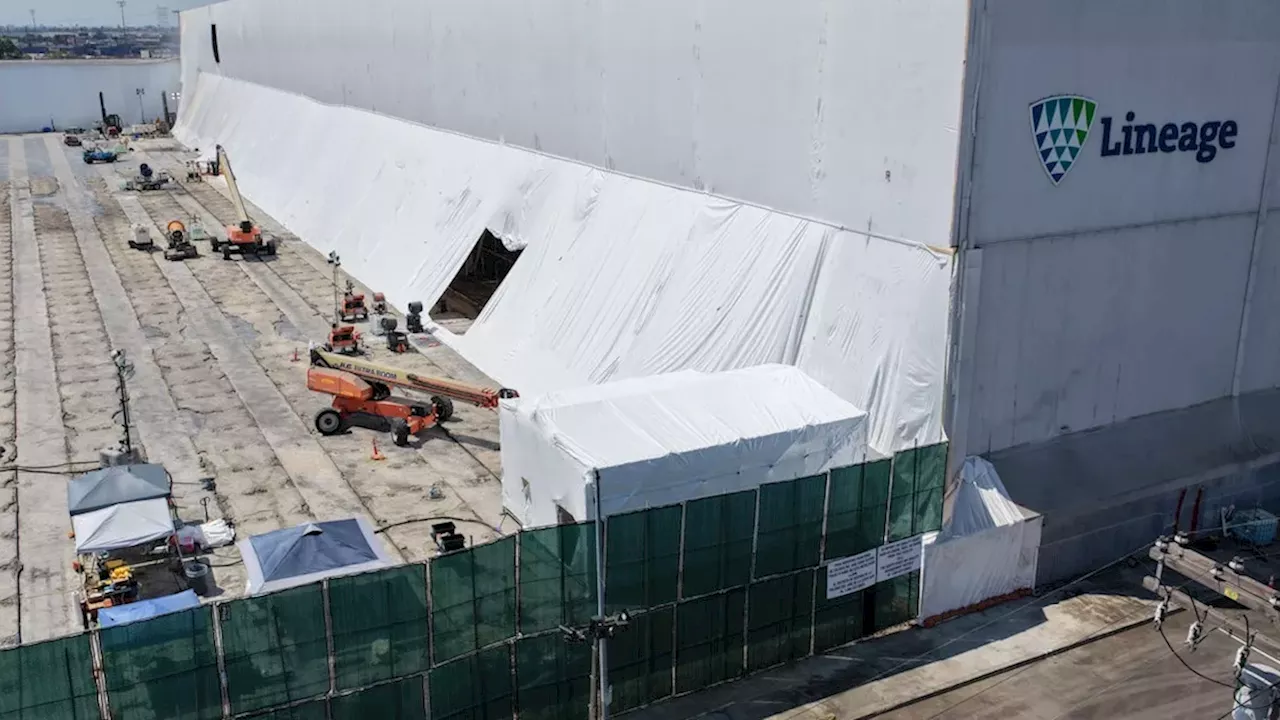
California Governor Gavin Newsom signed two new legislative bills over the weekend aimed at strengthening accountability for large-scale facilities and increasing support for local communities during major emergencies. The legislative action was directly inspired by the severe June 17 fire at the Lineage Logistics facility located on Los Palos Street in Boyle Heights, an incident that burned for nearly a week and left surrounding neighborhoods grappling with extensive environmental and health impacts.
What Changed
The newly enacted legislative package consists of Senate Bill 716 and Assembly Bill 817, introducing stricter regulatory measures and financial accountability standards for industrial operations.
Senate Bill 716, authored by Senator María Elena Durazo, increases fines for violations of local ordinances involving specified nonresidential structures of 20,000 square feet or more when those violations pose a direct threat to public health and safety. Under SB 716, violations resulting in a state of emergency declared by the California Governor or a federal disaster declaration can trigger escalated fines of up to $50,000 per violation. These enhanced penalties are scheduled to go into effect statewide in July 2028.
Assembly Bill 817, authored by Assemblymember Mark González, introduces new contingency fund requirements for specified community needs tailored specifically for large cold storage facilities. AB 817’s requirement applies first to facilities located within the Boyle Heights Community Plan border, before expanding statewide in July 2028.
Context and Background
The legislative response follows a major industrial emergency that severely tested local resources and disrupted neighboring populations. On June 17, a fire broke out at the Lineage Logistics cold storage facility on Los Palos Street. While the exact cause of the fire was described as undetermined, officials noted it likely started on the extensive array of solar panels installed on the roof of the warehouse. The blaze burned continuously for nearly a week.
The aftermath of the fire triggered secondary crises. Following the blaze, millions of pounds of food being kept at the cold storage facility began to rot. This decay produced a powerful stench and led to widespread infestations of rats, flies, and other rodents in the surrounding areas. The incident directly impacted Boyle Heights, Montebello, Commerce, and surrounding communities.
Business Implications and Sector Impact
For large-scale facility operators, cold storage providers, and industrial real estate owners, the new laws represent a significant shift in operational risk management and compliance costs. Large cold storage facilities will now be required to maintain contingency funds designated for specified community needs, introducing proactive financial planning mandates before emergencies occur.
Furthermore, the prospect of facing fines up to $50,000 per violation during a declared state of emergency under SB 716 substantially raises the financial stakes for code compliance and safety maintenance. Industry participants must evaluate their infrastructure, particularly roof-mounted solar installations and safety systems on large nonresidential structures exceeding 20,000 square feet.
Who May Be Affected
Residents and local government agencies in Boyle Heights, East LA, Montebello, Commerce, and surrounding areas are directly affected by the regional implications of the legislation. Families in Boyle Heights and East LA reported being exposed to toxic smoke and living with the stench of millions of pounds of rotting food for months. According to community accounts, residents could not open their windows, could not let their children play outside, and suffered health impacts while corporate entities faced previous penalties considered inadequate by lawmakers.
On the corporate side, major cold storage operators such as Lineage Logistics and similar industrial facility stakeholders face tighter regulatory scrutiny, mandatory contingency fund allocations, and harsher financial penalties for safety and ordinance violations.
Risks and Limitations
While AB 817’s contingency fund requirements take effect first within the Boyle Heights Community Plan border, statewide application for both bills and the enhanced $50,000 fine structure under SB 716 are deferred until July 2028. This multi-year timeline means that widespread statewide enforcement is not immediate, leaving a transitional gap before full financial and regulatory frameworks are active across all jurisdictions.
Additionally, industrial operators must navigate the operational complexities of establishing dedicated contingency funds for community needs while balancing compliance with local ordinances across different municipalities.
What to Watch Next
Observers and industry stakeholders will monitor the initial rollout of AB 817 within the Boyle Heights Community Plan border to see how contingency funds are structured and administered. Implementation timelines leading up to the statewide adoption in July 2028 will also be critical for large facility operators adjusting their compliance budgets and risk mitigation strategies.
Legislative authors and local officials emphasize that the new tools are designed to prevent future industrial sites from creating similar community crises. “Boyle Heights showed us the lasting impact a major facility emergency can have on a community,” state leaders noted, emphasizing that the laws provide the tools and accountability needed to protect residents during future crises.