
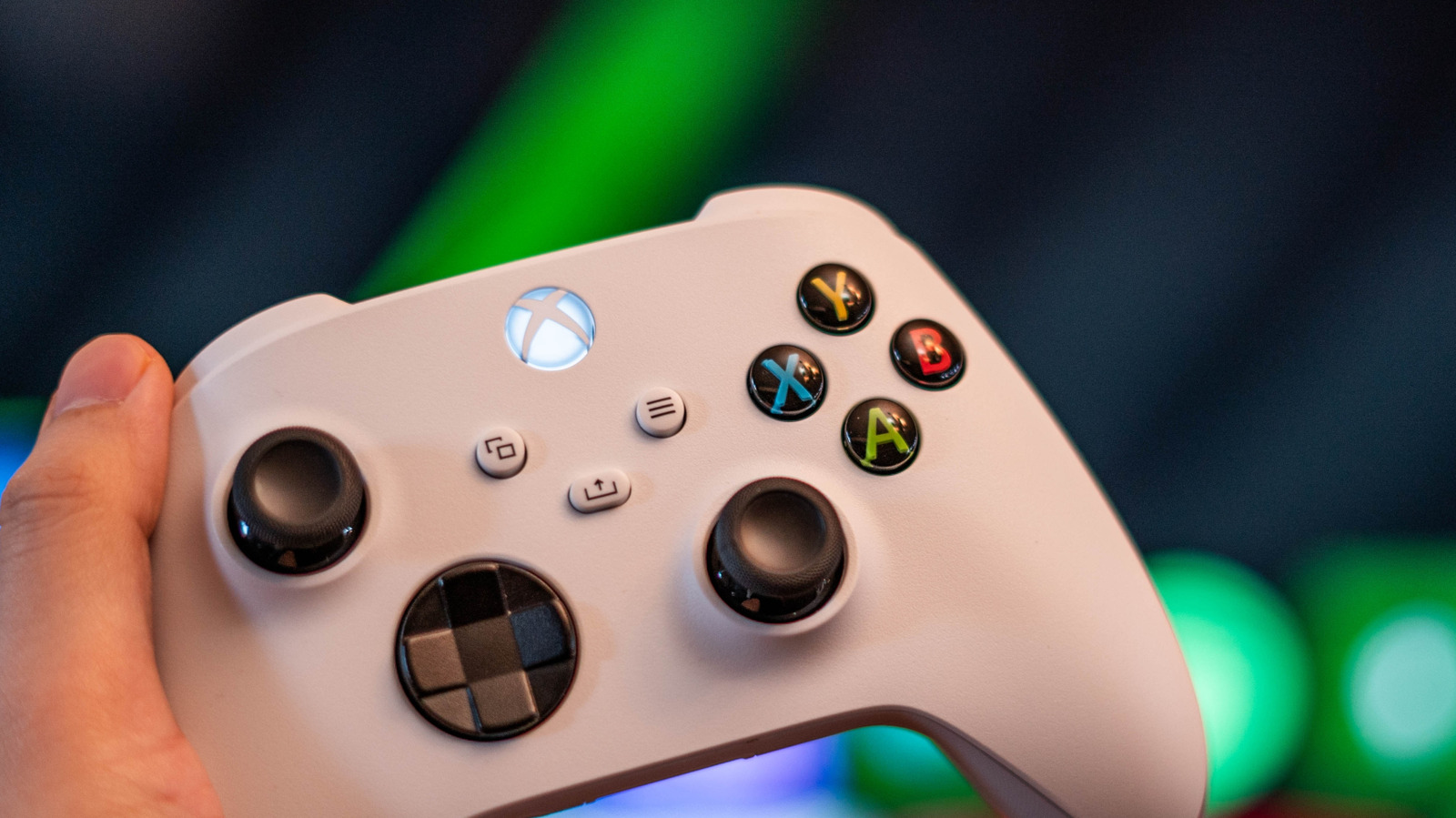
Overview: Bringing PlayStation 5 Software to Xbox Series X
In a notable technical milestone for software virtualization and cross-platform modding, developer Devran Cosmo Uenal has successfully created the PS5X emulator. The project represents a custom Xbox Series X port of KytyPS5, an open-source PlayStation 5 emulator originally designed for personal computers. By adapting the codebase to run natively within the Xbox ecosystem, Uenal has demonstrated that Microsoft’s flagship hardware can execute a select list of small PlayStation 5 titles.
As documented in technical coverage by BGR reporter Diego Perez and showcased directly on Uenal’s YouTube channel, the PS5X emulator project introduces native Xbox input support along with a tailored selection user interface (UI). While the capability to launch PlayStation 5 software on rival hardware marks a significant development in homebrew emulation, severe hardware abstraction barriers and rendering API incompatibilities currently constrain overall performance and title compatibility.
What Changed: The Technical Architecture of PS5X
Porting KytyPS5 to Console Hardware
The core foundation of the PS5X project relies on KytyPS5, an open-source emulation project designed to translate PlayStation 5 instruction sets and graphics commands for x86-64 personal computer architectures. Uenal took this underlying software stack and modified its framework to execute on Xbox Series X system software. The resulting software package, dubbed PS5X, bridges the gap between Sony’s proprietary game environment and Microsoft’s console environment.
To deliver a usable console experience, Uenal built a custom front-end selection UI. This interface allows users to navigate an on-screen library using standard Xbox Series X controllers. Input mappings have been translated directly within the emulator build, allowing native Xbox controllers to operate within emulated PlayStation 5 titles without requiring third-party translation hardware or external computer intervention.
The Vulkan to DirectX Translation Barrier
The primary technical hurdle facing the PS5X emulator lies in graphics rendering translation. The PlayStation 5 software environment relies heavily on modern low-level rendering pipelines, whereas Xbox Series X system software does not natively support Vulkan rendering APIs. Because Vulkan is not natively available on the Xbox platform, PS5X cannot pass graphic rendering calls directly to the GPU.
Instead, PS5X must manually translate all incoming Vulkan rendering calls into DirectX commands in real time. This translation layer introduces considerable computational overhead, directly impacting frame rates, rendering stability, and overall software compatibility. Because every graphical instruction must pass through an intermediary API conversion wrapper, the Xbox Series X graphics pipeline incurs frame time penalties that do not exist when running native Xbox applications or when running KytyPS5 on native Vulkan-supported PC hardware.
Current Library Showcase and Performance Metrics
Demonstrated Titles and Initial Library Scope
Because of rendering translation constraints and early-stage emulator architecture, the PS5X emulator is currently restricted to running a select number of smaller PlayStation 5 software releases. In early library demonstrations published on Uenal’s YouTube channel, four specific titles were highlighted as functional within the custom interface:
- Quake 2
- Gex Trilogy
- Hellboy: Web of Wyrd
- Marvel Cosmic Invasion
These smaller titles serve as testbeds for evaluating rendering accuracy, input lag, and translation pipeline efficiency on Xbox hardware. While these games demonstrate functional execution, performance varies significantly based on scene complexity and rendering demands.
Performance Benchmarks: Analyzing Quake 2 Gameplay
Real-time gameplay footage of Quake 2 running on the PS5X emulator provides concrete performance metrics for the project’s current state. During active testing on Xbox Series X hardware, frame rates for Quake 2 fluctuate between 20 and 40 frames per second (FPS).
This frame rate variance highlights the impact of the manual Vulkan-to-DirectX translation layer. Despite Quake 2 being a modern re-release of a legacy title with comparatively modest hardware requirements, rendering translation overhead prevents the Xbox Series X from maintaining a stable 60 FPS output. The observed 20 to 40 FPS range underscores how raw hardware power alone cannot bypass API translation bottlenecks without further optimization of the emulator’s core backend.
Expanded Testing and Recent UI Updates
Newly Added Titles Under Evaluation
A recent UI update for the PS5X emulator revealed an expanded list of games undergoing internal testing by Uenal. The updated user interface displayed three prominent higher-profile titles added to the test library list:
- Crash Bandicoot 4: It’s About Time
- Grand Theft Auto 5
- Gran Turismo 7
The appearance of these games within the PS5X menu interface indicates that Uenal is attempting to scale the emulator’s execution capabilities to encompass larger commercial games with complex 3D environments and heavy memory footprints.
The Playability Uncertainty for AAA Titles
Although Crash Bandicoot 4: It’s About Time, Grand Theft Auto 5, and Gran Turismo 7 are visible within the updated PS5X interface, public documentation has not yet established whether these larger AAA titles can achieve acceptable playability on Xbox hardware. The computational overhead required to translate complex shader instruction sets in games like Gran Turismo 7 presents severe challenges for real-time translation layers.
Industry observers and technical reports emphasize that displaying a game title within the emulator’s front-end interface does not guarantee fluid frame rates or glitch-free rendering. Whether these newly added titles can move beyond basic booting states into fully playable performance profiles remains one of the primary technical uncertainties surrounding the project.
Installation Workflow and Platform Safety Claims
Deployment via Xbox Developer Mode
When the PS5X emulator reaches a stage suitable for public release, installation will rely entirely on Microsoft’s official Developer Mode ecosystem. Unlike traditional console modifications or softmodding techniques that require exploiting system firmware vulnerabilities, Developer Mode is a standard software feature built directly into the Xbox system architecture.
To run homebrew packages such as PS5X, users must put their Xbox Series X into Developer Mode. This configuration enables the console to side-load unsigned Universal Windows Platform (UWP) binaries and custom application builds. Operating within Developer Mode isolates homebrew software execution from commercial retail software environments.
Console Integrity and Safety Assessment
Claims surrounding the project assert that installing and executing PS5X via Xbox Developer Mode is completely safe and will not brick the console hardware. Because Developer Mode functions as an official, sandboxed development framework authorized by Microsoft, running applications within this mode does not modify core system flash memory or corrupt native system firmware.
However, running custom binaries in Developer Mode separates the console from standard retail network features while active, requiring users to reboot between retail software modes and sandbox development modes to access commercial multiplayer services.
PC Baseline Comparison: PC KytyPS5 vs. Console PS5X
High-End PC Benchmarks for KytyPS5
To evaluate the realistic performance trajectory of PS5X, technical comparisons must be made against the baseline PC release of KytyPS5. On personal computers equipped with native Vulkan graphics driver support and high-end hardware, KytyPS5 has demonstrated broader capability, including running Grand Theft Auto 5 in a fully playable state.
Because high-end PC environments bypass the need for Vulkan-to-DirectX translation layers, the upstream KytyPS5 codebase can allocate a larger portion of system resources directly toward CPU instruction translation and GPU thread scheduling. This native API advantage allows high-end PC rigs to achieve functional playability in complex open-world titles that remain challenging for console-side ports.
Stability vs. Frame Rate Constraints on PC
Despite PC hardware advantages, KytyPS5 still faces significant emulation hurdles across demanding modern titles. On PC hardware test setups, KytyPS5 is capable of booting and running high-profile PlayStation 5 exclusives such as Astro Bot and Demon’s Souls without triggering fatal application crashes.
However, execution stability does not translate to playable frame rates. During PC testing of Astro Bot and Demon’s Souls, performance plummets into single-digit frame rates. These results confirm that while the core emulator architecture can process the complex game engines driving native PS5 exclusives, rendering and instruction execution speeds remain severely unoptimized across all platforms.
Technical Limitations and Sector Implications
Out-of-Reach Exclusives
Given the frame rate penalties observed on both PC and console implementations of KytyPS5, claims associated with the project clarify that highly demanding PlayStation 5 exclusive titles will not run on Xbox hardware in the foreseeable future. Key titles confirmed to be beyond current emulation capabilities include:
- Marvel’s Wolverine
- Demon’s Souls
- Ghost of Yotei
The graphical rendering complexity, heavy bandwidth demands, and specialized memory mapping required by these titles exceed the capabilities of current translation layers. Expecting modern AAA exclusive titles to run at commercial quality standards on Xbox Series X through API translation wrappers is technically unrealistic at this stage of development.
Upstream PC Breakthroughs and Downstream Filtering
Development expectations suggest that if upstream work on PC KytyPS5 continues, recent breakthroughs made in the PC emulator environment are expected to eventually filter down to the console-based PS5X port. Improvements to core instruction decoding, memory management, and shader compiler routines made on PC can theoretically be compiled into future PS5X updates.
However, the downstream migration of PC breakthroughs will always be constrained by the DirectX translation bottleneck unique to the Xbox hardware platform. Unless a more efficient Vulkan-to-DirectX translation framework is developed, PS5X performance will inherently lag behind PC KytyPS5 releases.
What to Watch Next
As Devran Cosmo Uenal continues to refine the PS5X emulator, several critical technical parameters remain unresolved and require ongoing observation:
- Public Release Timeline: There is currently no confirmed public release date for the PS5X emulator package.
- AAA Title Playability Verification: Technical analysis must determine whether larger games shown in recent UI updates, such as Grand Theft Auto 5, Gran Turismo 7, and Crash Bandicoot 4: It’s About Time, can achieve stable, playable frame rates on Xbox Series X.
- Translation Layer Optimization: The degree to which manual Vulkan-to-DirectX rendering translation can be optimized will dictate whether PS5X can ever achieve true feature and performance parity with upstream PC KytyPS5 development.
While the PS5X project marks a fascinating proof-of-concept for cross-console virtualization, hardware abstraction barriers ensure that native PlayStation 5 hardware remains essential for playing Sony’s modern library at intended performance standards.