
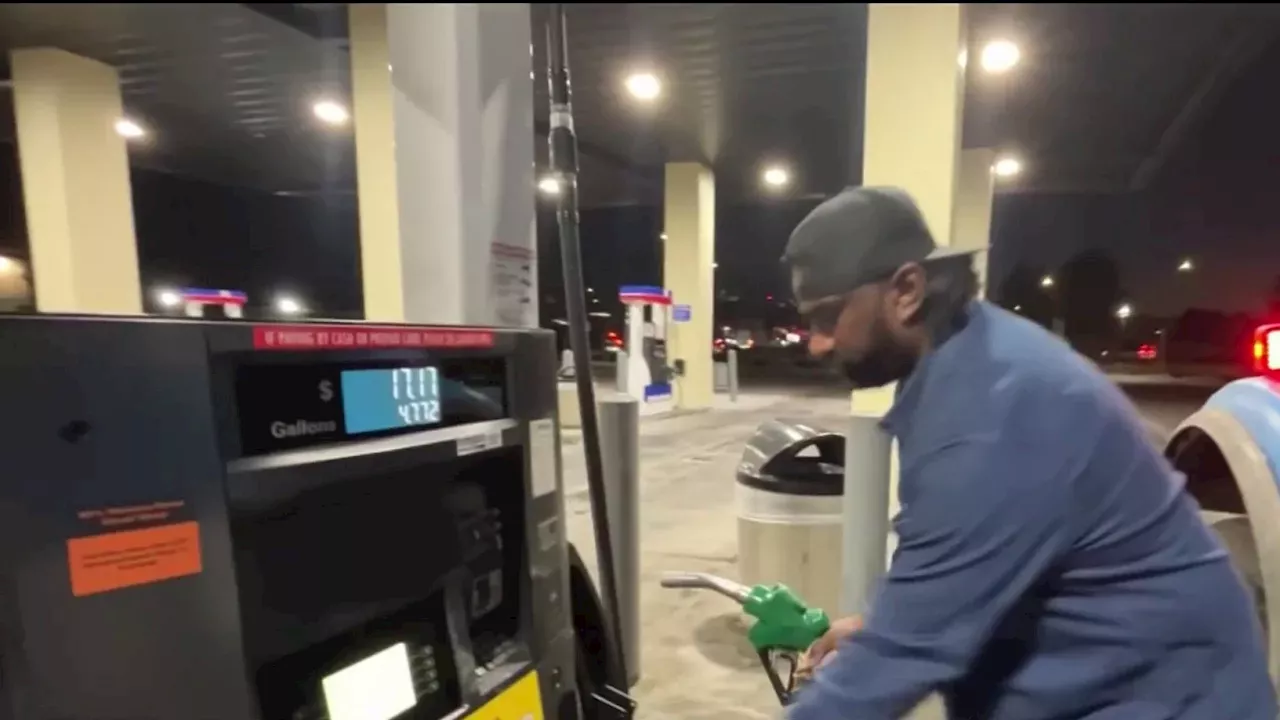
California Gasoline Prices Near Record High as Newsom Eases Summer Fuel Requirements as consumers face staggering pump costs across the Bay Area and beyond. With the statewide average reaching $6.37 per gallon—sitting just seven cents below the state’s all-time record high of $6.44—state officials have intervened to try and alleviate severe financial pressure on motorists and businesses alike.
What Changed
Governor Gavin Newsom took executive action on a Monday to suspend California’s mandatory seasonal summer-blend gasoline requirements. Under this directive, state agencies were instructed to immediately permit the early manufacturing, importation, distribution, and sale of winter-blend gasoline across the state. This regulatory shift aims to accelerate the transition between fuel blends, which typically occurs later in the year, in an effort to ease supply constraints and lower production costs for refineries.
Context and Current Pricing
The executive action arrives against a backdrop of painful retail prices at service stations throughout Northern California and major metropolitan centers. According to data from AAA, the statewide average for regular gasoline hit $6.37 per gallon. In major hubs, the burden is even heavier. San Francisco’s average price for regular gas climbed to $6.56 per gallon, sitting just eight cents shy of its local record. Meanwhile, average prices in San Jose reached $6.38 per gallon, roughly 17 cents below its historical peak.
Individual motorists are experiencing even more extreme spikes at individual service stations. Gas stations in San Jose were observed charging over $7 per gallon for regular gasoline. For everyday drivers, these rates translate directly into soaring operational and personal expenses, with routine tank fill-up costs easily exceeding $100.
Sector Impact and Economic Pressures
The surge in fuel costs is sending ripple effects through household budgets and discretionary spending patterns. Ethan, a visitor to the Bay Area from Nevada, highlighted the broader economic friction caused by the pricing spike. “You’ve got to start thinking about, okay, it’s also grocery prices going up, do I really need to travel for that vacation, do I really need to travel for those moments, or do I need to sit back at home, sit on the couch, save up some money for what actually matters,” he observed.
Behind these retail figures lies a complex web of structural and global pressures. California gas prices are continuously impacted by a combination of global oil shocks, reduced shipments through the Strait of Hormuz, strict state fuel standards, limited local refinery capacity, and state excise taxes. These localized constraints historically make the state’s fuel markets uniquely vulnerable to supply disruptions compared to the rest of the United States.
Business Implications and Expert Analysis
Industry experts had anticipated Newsom’s executive action regarding the winter-blend gasoline transition, recognizing it as a traditional regulatory lever during supply crunches. However, analysts emphasize that the state’s capacity to dictate pricing is fundamentally constrained by global commodities.
Caroline Chen, a professor at San Jose State University’s Lucas College of Business, pointed out the clear boundaries of state intervention. “California cannot control what the price of a barrel of crude oil is, that is beyond the control of California, but what California can control is what we do in our state,” Chen stated.
Regarding other potential fiscal interventions, Chen noted that an excise tax suspension remains a topic of discussion among policymakers. “I do also believe that an excise gas tax holiday could possibly be in the cards, but if that happens, then the state will lose out on being able to collect those excise taxes to use for other funding,” Chen added. Despite these considerations, Governor Newsom has not proposed a gas tax holiday at this time.
Risks, Limitations, and Uncertainties
While the suspension of summer-blend rules is designed to smooth out supply bottlenecks, experts emphasize that further gas price drops will largely depend on external factors outside of California’s direct control. Global crude benchmarks, geopolitical tensions affecting shipping lanes like the Strait of Hormuz, and refinery operational statuses will continue to dictate wholesale costs.
Furthermore, notable uncertainties remain for consumers and businesses. It is currently uncertain precisely when noticeable price relief will arrive for California drivers following the governor’s directive. It is also uncertain whether an excise gas tax holiday will eventually be proposed or implemented by state lawmakers.
What to Watch Next
Market observers and commuters will be monitoring retail price trends across AAA reporting channels to see how quickly refineries shift production lines to winter-blend fuel. Additionally, stakeholders will track whether ongoing global oil market shifts or further executive interventions materialize as the state navigates this period of heightened fuel costs.